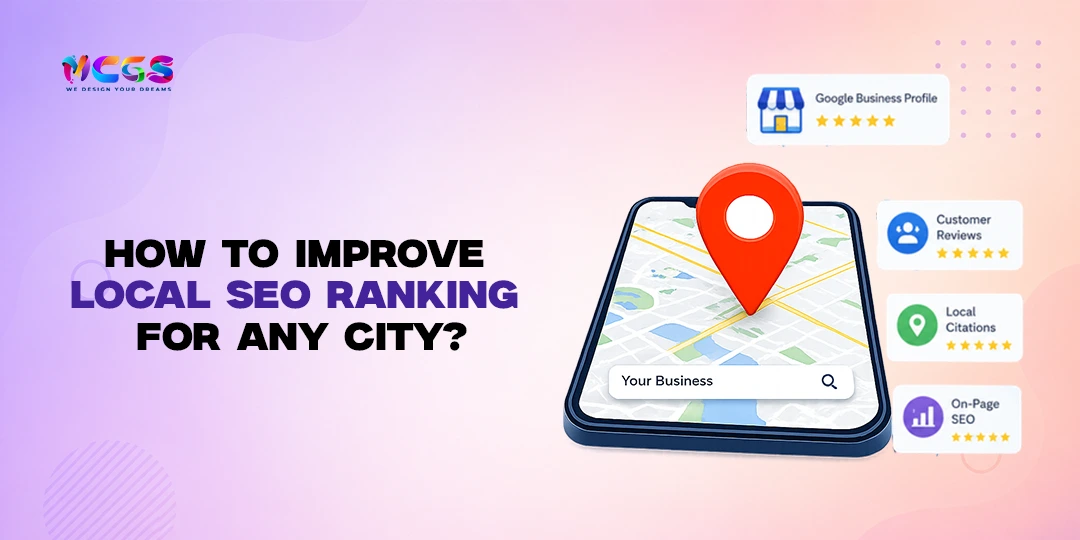
A customer’s searching “best plumber near me” on their phone. They see a Google map pop up with three businesses listed. If yours isn’t there? You just lost a sale to someone else.
This is what local SEO means in 2026. It’s not optional anymore if you have a physical location or serve specific areas. Whether you’re running a salon in Bangalore, a dental office in Mumbai, or a home services business anywhere, local search determines whether customers find you or your competitor.
I’ve worked with hundreds of businesses on this. Some get it right away. Others spend months fumbling around. The difference? Understanding what actually moves the needle.
What Is Local SEO?
Local SEO is pretty straightforward. It’s getting your business to rank higher when people search for services in your area. When someone types “dentist near me” or “pizza Whitefield,” Google shows a map with nearby businesses. That’s where local SEO matters.
Most people think it’s just about being on Google Maps. It’s bigger than that. You’re competing for:
- Map listings (those three businesses that show up with the map)
- Google Business Profile visibility
- Local search results with location keywords
- “Near me” searches
The whole point? Making sure customers who are actively looking for what you offer can actually find you.
Why Local Search Is Different Now
Things have shifted. Mobile searches with local intent are through the roof. People don’t sit at desks searching for local services anymore. They’re on their phones, right when they need something.
Mobile is basically everything. Around 90% of local searches happen on phones. If your Google Business Profile is incomplete or your website’s not mobile-friendly, you’re invisible to most searchers.
Reviews actually impact rankings. Google now heavily weighs how many reviews you have, how recent they are, and your rating. A business with 100 recent 4-star reviews beats a business with 10 older reviews every single time.
Voice search changed the game. People ask their phones “coffee shops near me” or “urgent care open now” in natural language. This isn’t the same as typed searches, so your keywords need to reflect how people actually talk.
We see a lot of businesses thinking they can do local SEO once and forget about it. That’s not how it works. Your competitors are updating reviews, adding photos to Google Business Profile, and creating local content constantly. You need to do the same.
How Google Actually Ranks You Locally
Google uses three main things when deciding if you should rank for a local search:
Relevance: Is your business actually what the person is searching for? If someone’s looking for a dentist, Google needs to confirm you offer dental services. This comes from your Google Business Profile, your website content, and how consistent your information is everywhere online.
Distance: A plumber three blocks away will rank higher than one across town. That said, strong reviews and relevance can sometimes beat distance.
Prominence: Basically your reputation. Google measures this through reviews, how many legitimate directory listings mention you, backlinks to your site, and whether you’ve been featured in local news. A newer business with 200 reviews can outrank an older one with 10 reviews.
Here’s a real example: Two restaurants in the same building, roughly equal on the first two factors. But Restaurant A has 150 reviews averaging 4.7 stars and got featured on a local food blogger’s site. Restaurant B has 15 reviews. Restaurant A wins in search results. Google sees that prominence gap and prioritizes accordingly.
What Actually Works for Local Rankings
Get Your Google Business Profile Straight
Fill everything out. Seriously. Leave nothing blank: business name, phone, address, postal code, hours, service areas, website.
Add real photos too. Profiles with photos get way more clicks. Show your storefront, team, work. Keep them current.
Write a 750-character description that actually tells people what you do. Don’t sound like a robot. “We’ve handled plumbing in South Mumbai for 12 years. Emergency repairs, new installations, licensed, 24/7 available.”
Keyword Research for Local Searches
Type your service into Google. What pops up in auto-complete? Those are real searches.
Look for:
- “Near me” variations (“dentist near me,” “plumber near me”)
- City + service combos (“dentist in Whitefield,” “pizza in Indiranagar”)
- Long-tail stuff (“emergency dentist open Sunday”)
We worked with a wedding planner optimizing for “wedding coordinator.” Nobody searched for that. Her customers searched for “wedding planner.” Once we switched, her inquiries jumped 40% in three months.
Create Content for Each City You Serve
One homepage doesn’t cut it if you serve multiple cities. Each major city needs its own page.
Make them actually different. Don’t copy-paste and change the city name. That’s lazy. Talk about neighborhood-specific stuff. Plumber in Bangalore? Mention summer dust. Pune? Talk about water scarcity.
Get Listed Everywhere Consistently
Citations are mentions of your business name, address, phone number anywhere online. They tell Google “this business is real.”
The key: consistency. If you’re listed as “ABC Plumbing” in one place and “ABC Plumbing Services” elsewhere, Google gets confused. Your rankings suffer.
Get listed on Google Business Profile, Bing Places, industry directories, local chamber of commerce, and local business directories. Standardize your name, phone, and address format everywhere first.
Reviews Are Everything Now
This is the single most important thing you control. Reviews impact rankings, click-through rates, and trust.
Google’s algorithm watches review frequency. Consistent monthly reviews signal “active, popular business.”
Ask people directly. After you finish a job, ask them to review you. Timing matters. Ask while they’re happy. Make it easy. Give them a direct link. The fewer clicks, the more people will do it.
We’ve found businesses that actively ask to get 10-15 new reviews monthly. Ones that don’t ask? Maybe 2-3. Over a year, that’s huge.
Handle negative reviews quickly. Respond professionally, acknowledge the issue, and offer to fix it. A well-handled bad review actually builds trust.
Make Your Website Mobile-First
Mobile page speed matters. A page that takes 5 seconds to load loses half your visitors.
Mobile-friendly buttons are critical. Make it easy to call you, get directions, and fill out a contact form.
Add schema markup that tells Google your business info, address, phone, reviews. WordPress plugins handle this easily now.
Mistakes That Kill Local Rankings
Don’t do these things:
Inconsistent information everywhere. Your name, address, phone must match exactly. A typo or slight variation confuses Google.
Mobile disaster. A website that doesn’t work on phones is basically invisible for local searches.
Never asking for reviews. Reviews drive both rankings and customer trust. It’s essential.
Empty Google Business Profile. Every blank field wastes opportunity.
City page spam. Creating identical pages with just the city name changed looks terrible and doesn’t rank.
The Bottom Line
Local SEO is competitive but not complicated. Optimize your Google Business Profile properly. Get reviews consistently. Keep your information consistent everywhere. Create local content.
These things compound. Six months of solid work beats years of half-hearted effort.
If you want professional help navigating this, MCGS and MageComp Graphics Studio offer local SEO services that handle strategy for businesses across industries. But honestly, a lot of this you can do yourself if you’re willing to be systematic about it.
FAQs
1. How long until I see local SEO results?
You might see small changes in 4-6 weeks. Real improvement takes 3-4 months. Reviews are your fastest way to move the needle.
2. Should I make separate pages for each city?
If you serve 2-3 cities, yes. Make them unique though. Don’t just copy-paste.
3. Do I need paid ads to rank locally?
No. Organic local SEO works. Combining it with paid ads speeds things up, but organic definitely works.
4. How many reviews do I need?
There’s no magic number, but 20+ shows consistency. Newer reviews matter more than old ones.
5. Can service businesses without a storefront rank locally?
Absolutely. Plumbers, electricians, therapists. Anyone can rank for their service areas.
6. How often should I post content?
One solid local blog post monthly beats posting weekly mediocre stuff. Quality over quantity.
7. Are backlinks important for local ranking?
Yes, especially local backlinks from other businesses and community sites in your area.
8. What’s the fastest way to improve local rankings?
Getting reviews systematically. Then consistent optimization and fresh local content.